MADRUGADAPhoto Series
20256 Artworks

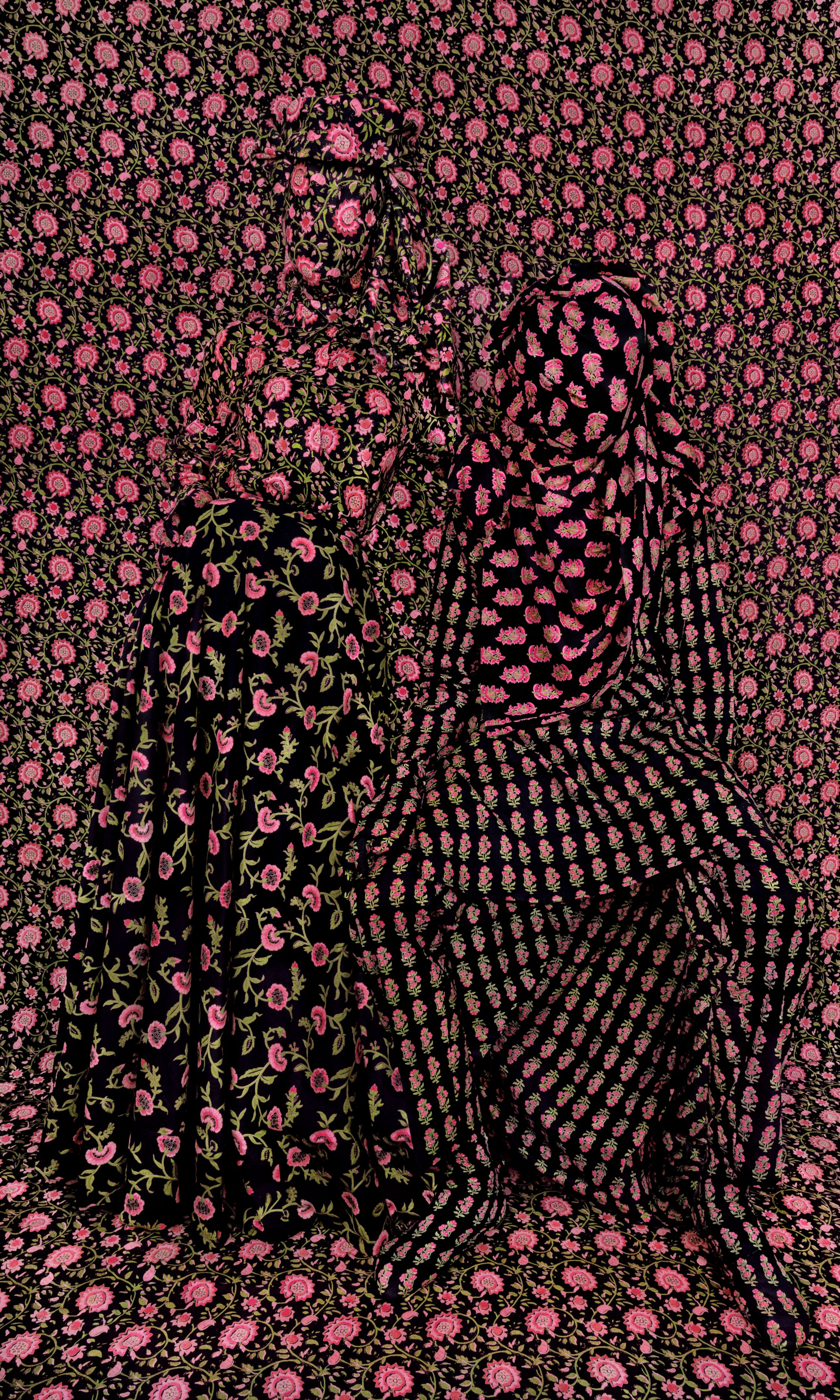
La Madrugada, 2025
The Spanish word madrugada is a cultural construct, a term that resists direct translation. It names a span of time suspended between night and morning—between midnight and daybreak—when darkness has not yet released its hold and light has not fully returned. Like the “witching hour” or the “magic hour,” madrugada signals a shift in perception, a threshold where awareness changes and possibility begins to surface.
There is a particular beauty in the nighttime hours, when silence sharpens the senses and attention turns toward the subtle. In the darkness, solitude transforms. What can feel heavy in daylight becomes porous at night, shared with unseen animals, night-blooming plants, and the lingering scent of flowers. Time slows, and the world is perceived differently.
Madrugada is attentive to light in all its states—sunlight, twilight, moonlight—and to the way perception changes as illumination fades. At night, dimness does not obscure but reveals. What remains unseen during the day emerges gradually, often through moonlight, altering scale, texture, and presence.
Night is not a single condition, but a cycle shaped by the moon. As it moves from full to new, light expands and recedes. When the moon disappears, visibility gives way to other modes of sensing—reflection, glow, bioluminescence. When the moon is full, night brightens toward clarity. Between these extremes lies a charged interval where light lifts and dims, inviting attentiveness rather than certainty.
The MADRUGADA series unfolds across five images. Dim anchors the sequence, flanked by Dawn and Dusk as single portraits. Madrugada brings two siblings together, recalling the intimacy of a familial grouping, while Midnight and Twilight return to separation, each figure standing alone. Across the series, light registers proximity, distance, and transformation.
Florals rise from darkness, vivid against a black ground where pattern accumulates and saturates the senses. Bodies perform against these patterned surfaces, at times fully legible, at times dissolving into shadow and bloom. Volume flattens, depth shifts, and figures appear and recede. The series moves like a nocturnal procession, attuning the viewer to the rhythms of the night garden—where vision adjusts slowly, and meaning arrives not all at once, but by degrees.